Virginia Opioid Abatement Authority
Virginia Opioid Abatement Authority
Everyone leaves jail one of two ways. At the Northwestern Regional Adult Detention Center, a program called HEART is fighting to make sure it’s the right one.
It started, as so many stories do, with an injury. A wrecked four-wheeler. A doctor’s prescription. A recovery that ended — except it didn’t.
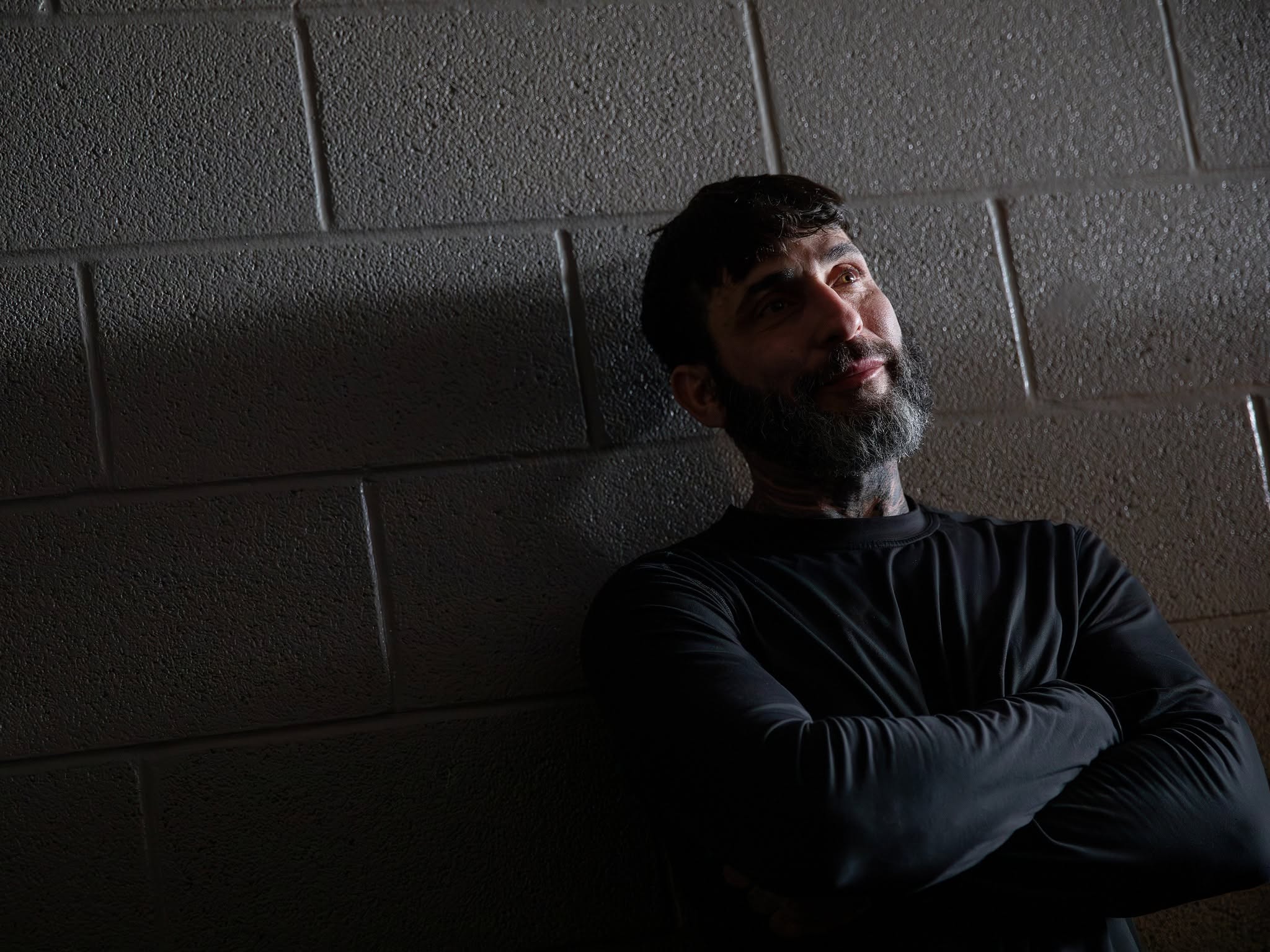
“I started buying (opiates) myself,” said Nathan Huntsberry. “Then eventually, over the years, it just escalated to heroin.”
What followed was a cycle that felt impossible to break: crimes, incarceration, release, and the gravitational pull back to the same place. He didn’t always resist it.
“There were times I tried to stay clean for a little bit,” Huntsberry said. “But there were other times I just knew I was going back (to drugs) and was looking for it when I got out.”
His story is not unusual. What happened next is.
A Better Person or a Better Incarcerate
The leadership at the Northwestern Regional Adult Detention Center (NRADC) talks about this plainly. Everyone who walks out of a jail walks out one of two ways.
“What’s become our mission here is we understand that people leave us one of two ways,” said Superintendent Clay Corbin. “They leave us as either a better person or a better incarcerate. We want to get them refocused, and we want to send them back out with all the tools to be better people, not better incarcerates.”
That distinction — deceptively simple, enormously consequential — is the animating idea behind HEART: Helping Each Other Align Recovery Together.
Launched in January 2025, HEART is a collaborative program between NRADC and the Northwestern Community Service Board (NWCSB), serving individuals with substance use disorders across Clarke County, Frederick County, Fauquier County, and Winchester City.
Before HEART, the calculus was different.
As HEART Supervisor Jessica Taylor put it: “As opposed to all the other incarcerations without the HEART program or anything else, you go out the way you came in. No money, no prospects. Still in the throes of addiction. Now you’re coming out — you have repurposed. Refocused. You’ve got a job. You have means. You can have housing. You have gainful employment.”
More Than Medication
HEART grew from an existing Medication-Assisted Treatment (MAT) program effort inside the jail, which later partnered with NWCSB’s Office-Based Addiction Treatment program to become something more complete. What distinguishes HEART from many jail-based MAT programs is its fully integrated model: MAT combined with psychiatric services, individual therapy, case management, peer recovery support, and group counseling.
“The HEART program is a holistic approach to treatment for opioid use disorder,” said Captain Heath Custer. “It is a partnership with our Northwestern Community Service Board. That partnership is what truly makes our Heart program work, because we care beyond what our jail is capable of doing.”
The science matters here. Medication alone — Suboxone, methadone — addresses the physical dimension of addiction. But opioid use disorder is not only physical.
“It takes a lot to understand the science behind it, the mental health component to it,” said Sergeant Jessica Mohr of the HEART program. “That’s the biggest part that the HEART program helps with. You can’t just give someone the Suboxone or the Methadone and it be a cure all. You also have to have the counseling, have the therapy, have the peer who’s been there and been in the same position as them, to understand the deeper parts of their life of why they were using.”
Mohr has watched the full model change outcomes, change lives.
“This program will change the way that people think about things,” Mohr said. “They will eventually see that the counseling and the therapy and all of the parts to the HEART program are what’s helping people not come back. The success rate that we’ve had has been massive.”
For Mohr, success looks like an empty bed. It looks like a familiar face that never returns.
Someone Who Gets It
One of HEART’s most powerful elements is also one of its most human: the peer recovery specialist. These are professionals with certified training — and lived experience. They’ve been in addiction. They’ve found their way out. And when they sit across from someone in a detention center who doubts that recovery is possible, they bring a credibility that no textbook can confer.
“Some of them look at us and say, ‘well, how could you possibly know? I mean, you went to school and you read it in a book, but how do you really know?’” said Rebekah Jarrell, the HEART program’s peer recovery specialist. “Peers can answer that question directly. ‘Actually, I do know exactly where you are. I know exactly how you’re feeling.’”
Jarrell likes to tell HEART participants “I’m a sober friend. Somebody that can be there for them through the same things that I’ve been through. Every person’s story is always super different. But I went through addiction. I’m on Suboxone. It helps them to know that there’s someone there that kind of gets what’s going on.”
The authenticity of that connection — unscripted, unearned by anything other than shared experience — is part of what makes it land.
“The people who’s actually creating and leading the programming, or people who’s walked that life before — it comes off much more authentic to the people listening, knowing that they’re looking at someone who’s faced the battle and is winning the battle versus somebody who’s never lived that life,” Corbin said.
We Are the Bridge
What happens on jail or prison release day is often where programs can fail. The individual walks out the door with a referral slip, a bus schedule, and the same world that swallowed them before. HEART is built specifically to close that gap.
“You do not leave here not knowing where you’re going,” Taylor said. “If you are in the HEART program, we are the bridge. The connection to the next part of your life post-release.”
That means warm handoffs — direct connections to community providers — not pamphlets.
For Huntsberry, the difference was concrete.
HEART program leaders “got me right into her rehab. She got me my first month rent free at a sober living house, jobs, a checking account, anything that I needed. All I had to do was ask.”
Early data shows promising outcomes, with participants successfully connecting to outpatient services immediately after release. For those returning to jurisdictions outside the NWCSB service area, the team provides resource linkage to ensure no one loses their footing at the most vulnerable moment.
“Jails typically are not thinking about your next step when you leave their jail. This jail is.”
“I’m Proud of You”
“I’m proud of you.”
Have you ever heard a correctional officer say that to someone who is incarcerated?
At NRADC, it happens every day — and they mean it. But for people who have moved through the jail system repeatedly throughout their lives, the belief in that level of culture change doesn't come easy.
"You always feel like everyone's against you, or you know the officers are against you, or that you're a number," Huntsberry said.
He'd heard it before. He'd believed it before.
Until NRADC.
Here "a captain of a jail is fighting for you,” Huntsberry said. “The superintendent of this jail is fighting for you. And you have this whole team of great people that all they want to do is see you succeed. When you get incarcerated and you get out everybody starts over. It doesn't have to be from the bottom."
The leadership at NRADC describes their role the same way — not as commanders of a hierarchy, but as connectors of a shared mission.
“Everybody comes together, meets, and everyone's vision is the same in order to help people get better," Custer said.
One vision. One mission. Enough to change a life.
Huntsberry started his opioid journey with a four-wheeler accident and spent years cycling through incarceration after incarceration — each release a countdown to the next arrest. That pattern is over.
Today he is clean. In recovery. Thriving.
Not because the system changed overnight. Because someone built the HEART program willing to ask a different question — not what did this person do? but what does this person need?
He left a better person. That's the whole mission.
The HEART Program is a collaborative initiative between the Northwestern Regional Adult Detention Center and the Northwestern Community Service Board. It was made possible through a Virginia Opioid Abatement Authority award to Frederick County in partnership with Clarke and Fauquier Counties and the City of Winchester.