Virginia Opioid Abatement Authority
Virginia Opioid Abatement Authority
Virginia has never seen anything quite like it.
For decades, the opioid crisis has taken lives, fractured families and strained communities across the Commonwealth from Southwest Virginia to the Eastern Shore — and for just as long, the people working to stop it have done so largely in isolation, without a common stage, a shared table or a statewide gathering built for them.
That changed in June.
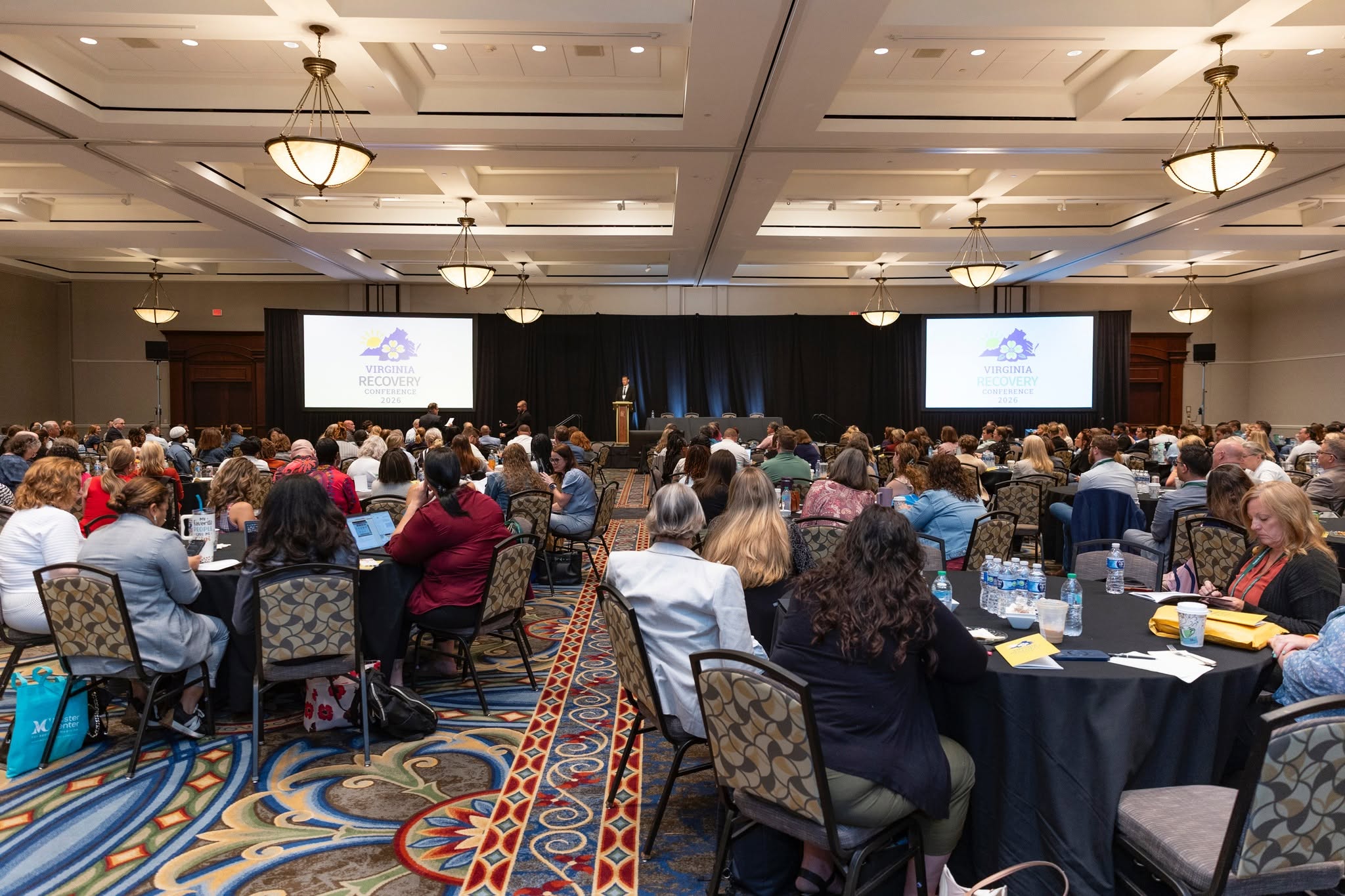
The inaugural 2026 Virginia Recovery Conference brought together over 400 recovery leaders, practitioners, peers, policymakers, researchers, advocates, local government representatives and community partners June 15–17 at the historic Hotel Roanoke & Conference Center for three days of learning, connection and collaboration that many in attendance described as long overdue.
Hosted by the Virginia Opioid Abatement Foundation and supported by the Virginia Opioid Abatement Authority, the sold-out statewide gathering was built around a single, urgent premise: the Commonwealth has resources — opioid settlement funds — and the communities most affected deserve to know exactly how to use them to save lives, restore families and heal from the inside out.
“This conference showed what is possible when Virginia communities come together with urgency, compassion and a shared commitment to recovery,” said Senator Todd Pillion, Chairman of the Virginia Opioid Abatement Authority (OAA). “The opioid settlements represent a historic opportunity, but funding alone is not enough. Communities need strong ideas, trusted partnerships and proven models. That is what this conference was designed to share.”
The conference opened Monday with remarks from Tim Spencer, President of the Virginia Opioid Abatement Foundation; McDowell; Roanoke Mayor Joseph Cobb; Dr. Sarah Thomason, Vice Chair of the OAA Board of Directors; and The Honorable Marvin Figueroa, Virginia Secretary of Health and Human Resources and OAA Board Member.
The opening day also featured “Recovery Uncovered: What Works and What Is Needed,” a powerful panel moderated by Honesty Liller, CEO of The McShin Foundation. The session centered the voices of peer recovery specialists and people with lived experience, highlighting how person-centered, recovery-oriented strategies can bridge the gap between systems planning and real-time recovery journeys.
“Lived experience is expertise,” Spencer said. “Some of the most meaningful moments of the conference came from people who know recovery personally and are using that experience to help others. Those voices must remain at the center of this work.”
Across nearly two dozen educational sessions, attendees explored a wide range of topics, including mobile treatment programs, regional peer-led outreach, women’s treatment services, recovery housing, crisis response, opioid settlement fund planning, public data tools, medication for opioid use disorder, re-entry supports, forensic science, recovery-to-employment pathways and partnerships between treatment and justice systems.
Tuesday’s agenda included a session on the evolution of Virginia’s crisis system led by Daryl Washington, Commissioner of the Virginia Department of Behavioral Health and Developmental Services. Concurrent sessions highlighted mobile treatment models, the story of Abingdon’s Mended Women Treatment Center, a regional mobile peer-led outreach collaboration among Chesterfield, Petersburg, Colonial Heights and Powhatan, and Virginia’s new Substance Use Disorder Analytics (SUDA) platform.
A Loudoun County case study offered practical lessons on creating a community-driven strategic plan for the use of opioid settlement funds, while regional breakout sessions gave attendees an opportunity to connect with others from their areas of Virginia and discuss local trends, gaps and opportunities.
The conference also featured sessions focused on the intersection of treatment and justice. “When Treatment and Justice Work Together: A Community Conversation on Recovery” brought together Brian Moran, former Virginia Secretary of Public Safety; Sheriff Karl Leonard of Chesterfield County; Mike Feinmel, Deputy Commonwealth’s Attorney in Henrico County; and Carla Taylor of Master Center for Addiction Medicine to discuss changing approaches to substance use, incarceration and recovery.
Other featured sessions included “The Look of Hope,” which highlighted work at the Northwestern Regional Adult Detention Center to provide therapy, medication and recovery supports; “Peers to the Rescue,” which explored the role of Recovery Navigators in public defender offices; and a Virginia Department of Corrections session on how social workers are advancing the effectiveness of medication for opioid use disorder in prison settings.
Wednesday’s sessions focused on emerging drug trends and long-term community solutions. Dr. Michael Lynch, Substance Use Disorder Services Senior Medical Director at the University of Pittsburgh Medical Center, led a session on the rapidly shifting landscape of synthetic opioids. A Dickenson County panel explored how recovery, workforce development, education and economic development can work together in rural communities. Other sessions spotlighted peer recovery centers, crisis facility models, forensic toxicology trends, and coordinated care for pregnant and parenting women and their children.
The conference also included exhibitors, networking opportunities, a Harm Reduction Corner with naloxone resources and training, a mocktail reception, a screening of “Together: Family Recovery” provided by Illume Family Recovery, and opportunities for attendees to connect with organizations supporting prevention, treatment, harm reduction and recovery across the Commonwealth.
While the inaugural Virginia Recovery Conference has ended, organizers emphasized that the work continues in communities across the Commonwealth.
“This was not just a conference,” Pillion said. “It was a reminder that Virginia has a recovery village, with people in every region who are committed to learning from each other, building what works and making sure help is available when and where people need it.”
For more information about the Virginia Opioid Abatement Foundation and the Virginia Recovery Conference, visit virginiarecovers.com.